
Drive through any estate in Airdrie or Coatbridge and look up. You’ll see it straight away — one roof looking its age, the neighbour’s looking fine, same street, same year built, same tiles.
People assume the green one has been neglected. Usually it hasn’t. It’s just facing the wrong way.
Moss doesn’t need soil. It needs damp and shade.
That’s the whole thing. Moss isn’t growing in anything — it anchors onto the rough surface of a tile and takes its water straight out of the air. Which is why it does so well here.
- Persistent damp rather than heavy rain. Around 1,100mm a year, but spread thin. Roofs here rarely get a proper dry spell to reset.
- Low winter sun. From October to March the sun barely gets above the rooftops, so a north-facing slope can go months without direct light.
- Mild winters. It doesn’t get cold enough for long enough to kill anything off.
That’s why the north side goes green and the south side doesn’t. Same house, same age, completely different microclimate three metres apart.
The tiles round here don’t help
A lot of post-war housing in North Lanarkshire has concrete interlocking tiles. They’re solid, they last, and they were the sensible choice at the time.
They’re also slightly porous and noticeably rougher than clay or slate. That texture is exactly what moss needs to get a grip. A slate roof of the same age on the same street will often be visibly cleaner, and it’s not because anyone’s been looking after it better.
If your roof is concrete tile and north-facing, you were always going to get moss. It isn’t something you did wrong.
Does it actually matter?
Honest answer: sometimes, and less urgently than people selling roof cleaning tend to say.
A light green film on a tile is doing very little. I’m not going to tell you that’s an emergency. What does matter is when moss gets thick enough to do these three things:
1. It holds water against the tile
A thick moss mat stays wet for days after rain. Concrete tiles cope with getting wet and drying out. They cope less well with being permanently damp, especially through a freeze-thaw cycle — water gets into the surface, freezes, expands, and takes a bit of the tile with it. That’s slow, but it’s real.
2. It ends up in your gutters
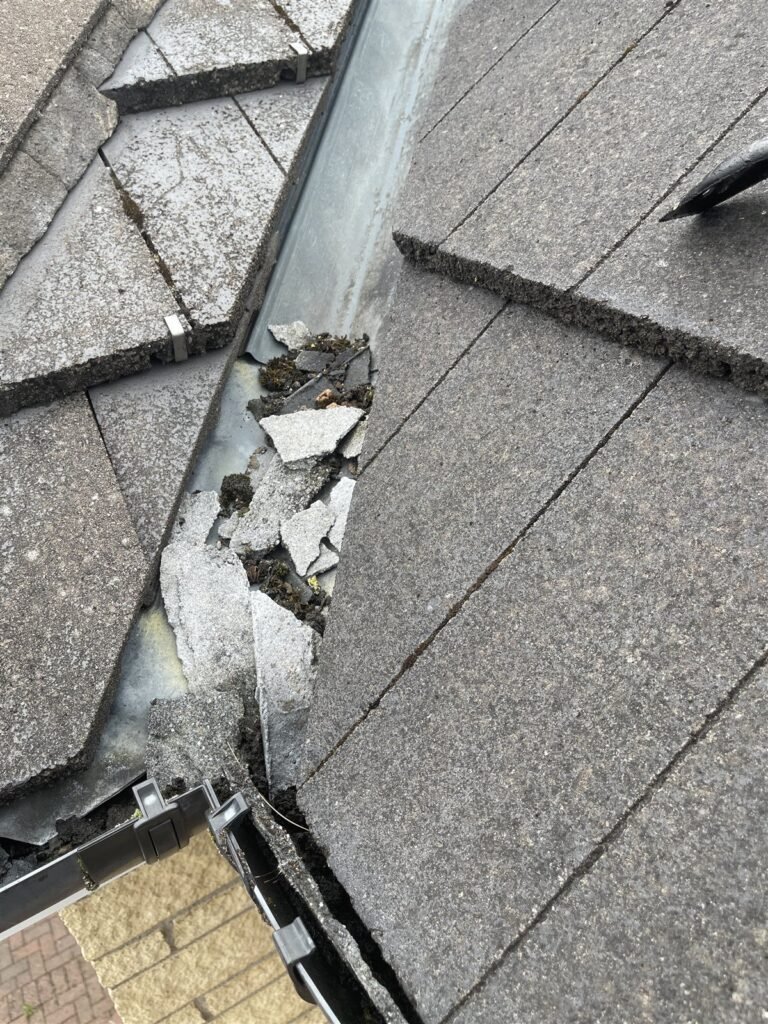
This is the one that actually costs people money. Moss sheds constantly, slides down with every shower, and packs into the gutter. Most of the seriously blocked gutters I clear round here are full of roof moss, not leaves. You fix the gutter, and three months later it’s full again, because the source is still on the roof.
3. It blocks the gaps that are meant to be there
Tiles are designed to shed water over each other with small gaps for airflow. Fill those with moss and water starts tracking sideways instead of down.
What doesn’t work
Pressure washing a roof. Please don’t, and don’t let anyone do it to yours.
A pressure washer will absolutely blast moss off a concrete tile. It’ll also strip the surface of the tile, drive water up under the laps, and take years off the roof. It looks spectacular for about eighteen months and then the roof ages faster than it should.
If someone quotes you for “power washing” your roof, that’s the moment to get a second opinion.
Scraping it dry. Takes the moss and a fair bit of tile with it, and leaves the spores behind anyway.
Doing nothing forever. Fine for a light film. Not fine once it’s a mat you can see from the street.
What I actually do
Soft wash. Low pressure, biocide treatment that kills the moss and the spores rather than just removing what’s visible.
It’s slower to look good — the moss dies first, then weathers off over the following weeks and months rather than disappearing on the day. People find that frustrating, and I’d rather tell you up front than have you expecting an instant transformation.
What you get for the patience is a roof that stays clear for three to five years instead of regrowing next spring, and tiles that aren’t any worse for the treatment.
Gutters come after, not before. Whatever comes off the roof lands in the gutter, so clearing gutters first is wasted money. I do them in the right order.
What it costs
- Roof cleaning from £200, quoted properly after I’ve seen it — pitch, access and how far gone it is all change the job.
- Almost always worth bundling with a gutter clear (£20–30 a side), because the debris has to go somewhere and you’d be paying me to come back otherwise.
Most window cleaners won’t quote for a roof at all. It’s the job people say no to. I don’t — I’ve got the gear and I’ve been doing this round here since 2016.
Worth a look if…
- You can see green from the pavement
- Your gutters keep filling up and nobody can work out why
- The north side looks noticeably older than the south side
- You’re thinking of selling — this is the single biggest kerb-appeal change on most houses
If you’re not sure, send me a photo from the street and your postcode. I’ll tell you honestly whether it needs doing yet. Sometimes the answer is “not this year” and that’s a fine answer.