
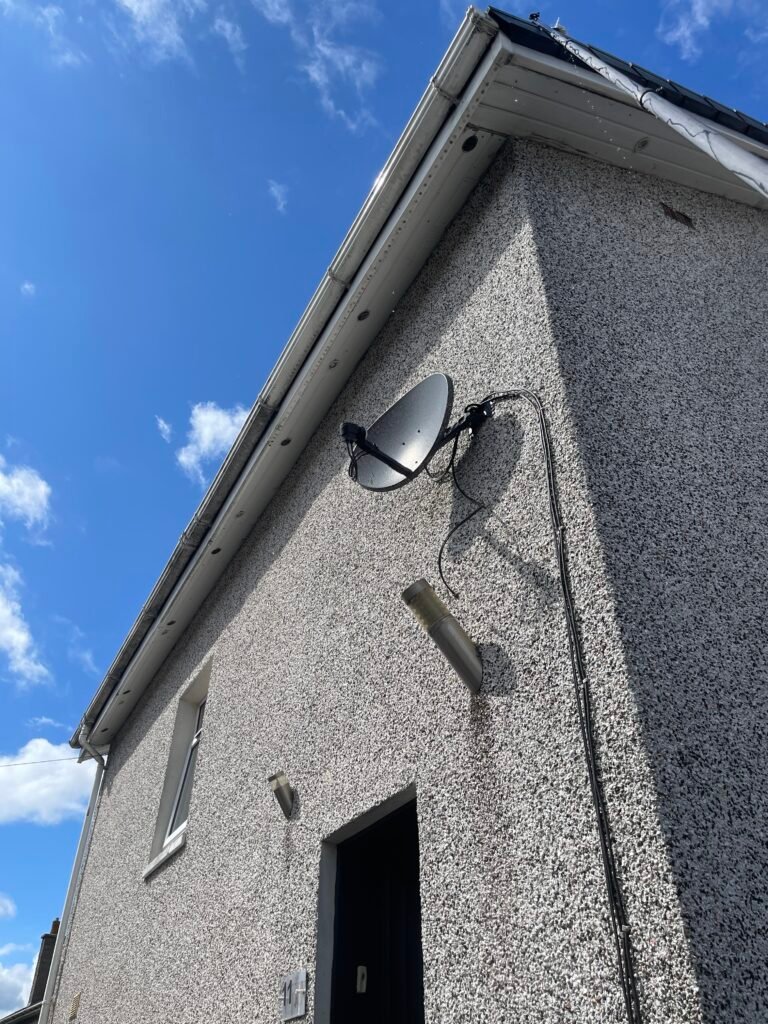
Named storms come through here several times a winter, and the morning after is when the phone goes. Most of those calls turn out not to be urgent, and one or two genuinely are.
Here is how to tell which you have got, before you ring anybody.
First: I am not going up there in a gale
Worth saying plainly. I am one person, not a 24-hour call-out service, and nobody should be working at height in high wind — including me.
If something has come loose during a storm, the safe order is: stay out from under it, take a photo from a safe distance, and deal with it once the wind drops. A gutter full of water is not worth an accident.
What to check from the ground, the morning after
The downpipe, during the next rain. Water gushing out the bottom means the system is running. Gutter overflowing while the pipe stays dry means something has washed into the outlet and is sitting there. That is the one worth acting on.
A sag in the gutter line. Sight along it from the far side of the road. Storms shift brackets, and a run that has dropped in the middle will hold standing water permanently from now on.
Anything hanging. A downpipe pulled off its clips, a gutter end dropped, a section separated at a joint. Photograph it and keep out from under it.
The ground below. A pile of moss or grit washed out onto the path tells you a lot came off the roof. That is worth knowing even if the gutter looks fine.
Ridge tiles and slipped slates. Not a gutter job, but a storm is when it happens, and what comes off the roof lands in the gutter. If tiles have moved, the gutter is a symptom.
What is actually urgent
A blocked downpipe. Everything that lands on that roof slope is now running down your wall instead of into the drain. On render and pebbledash it soaks in. Days matter here, not months.
Water getting inside. A damp patch appearing on an internal wall after the storm means water is already in the fabric of the building. Ring somebody.
Anything loose above a path or a door. That is a safety issue before it is a maintenance one.
What can wait
A gutter that overflows evenly along its whole length. It is full, it needs doing, and it will keep for a few weeks. Spring is the right time anyway — see how often gutters need doing.
Leaves and twigs sitting visibly on top. Looks alarming, drains fine. The water goes under it.
A single joint dripping in dry weather. That is a seal, not a blockage, and it has probably been doing it since before the storm.
Why storms fill gutters here specifically
It is usually not leaves.
A big wind strips moss and lichen off the roof in one go — particularly off concrete tiles on a north-facing slope, which never dry out properly and hold a lot of it. All of that arrives in the gutter at once, gets soaked, and packs down solid.
Which is why a storm clear-out sometimes wants the roof looking at too. If the same storm fills your gutter every year, the gutter is not the problem — the roof is feeding it. Clearing the gutter without dealing with that means paying for the same job every winter.
What I do when I come out
- Clear the run by hand so the joints, brackets and outlets get looked at on the way
- Flush the downpipes through and confirm they are actually running
- Check the brackets for anything the wind has shifted
- Photograph before and after, so you can see what came out
- Tell you if what I find is a repair rather than a clean — and I do not do the repair, so I have no reason to say it when it is not true
When I can come
Monday to Friday 7am to 8pm, Saturday 7am to 6pm. After a big storm the week fills quickly, so the honest answer is usually a few days rather than the same afternoon. If what you have is genuinely urgent, say so when you ring and I will tell you straight whether I can get there in time or whether you need somebody sooner.
Questions I get after a storm
Should I get the gutters cleared straight after a storm?
Not while it is still blowing. Wait for the wind to drop, then walk out the morning after and look along the gutter line from the pavement. Most storm damage round here turns out to be a gutter that was already full before the storm arrived.
Will you come out during the storm itself?
No. Nobody should be up a ladder or working a pole in a gale, and anyone who says yes is telling you something about how they work. If water is actively coming into the house, that is a roofer or an emergency plumber, not a gutter clean.
What counts as urgent after a storm?
A downpipe hanging off, a length of gutter pulled away from the fascia, or water getting inside. Everything else, including a gutter overflowing in the next shower, will keep until somebody can look at it properly in daylight.
How quickly can you get back to me?
Same-day response on quotes, usually within a few hours. Send a photo from the pavement with your postcode and you will get a straight answer on whether it needs doing now or whether it will keep. Clearing is from £25 per side.
Checking after a storm is standard practice, not an upsell. Historic Environment Scotland’s building conservation centre advises owners to “regularly clear rainwater goods, gullies and drains of plant growth, leaves and debris – be especially vigilant in autumn or after a storm.” Vigilant, though, not panicked: look first, ring second (Engine Shed, rainwater goods).
Getting a price
Send a photo from the pavement and your postcode. You will get a straight answer about whether it needs doing now or whether it will keep.
07440347383
More: the warning signs · what it costs